When the coincidence meets the conditions, the magic comes
General information
- Location: Cayambe Coca National Park, Pichincha Province, Ecuador
- Elevation: 5790 m.
- Number of days: 2 D / 1 N
- Technical level: medium-high
- Physical level: high
- Hut: Oleas Ruales Hut (4600 m.)
- Prominence (from the Hut): 1190 m.
- Summit attempt suggested hour: 12 a.m. – 1 a.m.
- Average ascent time: 8 – 9 hours.
Having reached this summit means a lot to me, after one failed attempt due to bad weather conditions and my own lack of strength after hours trying to hike up against the cruel wind.
Unlike the previous mountains I have attempted, this second-attempt of the Cayambe’s summit was not initially planned. My objective during that year was to reach the summit of mountains unknown to me, and/or with an elevation inferior to 5000 m.; no more, no less. I started the year climbing mountains several Saturdays and Sundays in a row.
The mountains that prepared me for the Cayambe Volcano were Rumiñahui Central (4630 m.), Fuya Fuya (4290 m.), Yanahurco de Mojanda (4231 m.), the Integral route of the Pichinchas (4784 m.), Iliniza Norte (5126 m.), and Morurco (4880 m.). I must admit that I performed better than expected during this preparation, which made me think it was not a crazy idea attempting the Cayambe’s summit once more. So I decided to give it a try. After all, I was already acclimatized to the altitude with the mountains I had climbed at the beginning of the year. In addition, it was February, a month with high probabilities of summit thanks to the relatively stable weather conditions.
I sought an agency to help me with the logistics and finding a rope mate. Finding the right climbing mate was what worried me the most. Ideally, they should be someone you trust, that is physically and technically well prepared for the same mountain, and someone desiring to attempt the same mountain at the same time. With the help of one of the agencies I had previously hiked with, I got the contact number of a hiker I knew, and who was also willing to attempt this mountain at the same time.
Even though he was not someone I had known for a long time (just a couple of months), I remembered he had a good performance, had already summited the Cotopaxi Volcano, and had been constantly acclimatizing to the altitude, just like me. So I sent a message, told him a little more about the preparation I had been having before Cayambe, and also let him know about my past failed summits. I wanted to be as sincere as possible about my expectations, and fears. At the end, he accept being my rope mate, and the arrangements began. We looked for one of the agencies I had climbed with before to take care of the logistics, and set up a date.
One weekend before the attempt, my mate joined me in the last preparation mountain, Morurco. The week previous to the attempt, I lowered the intensity of physical activity, and completely rested the 2 days before. During the week, I became a little obsessed with the weather, and kept on monitoring the forecast for that weekend. Being in the equator, I knew there was no accurate way to predict the weather for the journey. The weather might vary a lot from day to day, even in the most stable weather season.
It was Saturday now. I woke up early, had breakfast, double-checked my backpack, gear, and equipment, and got ready before my mate picked me up. We stopped in the nearby Cayambe City to have lunch before going to the Cayambe’s hut (Ruales Oleas Berge Hut, named after 3 mountaineers that died in the volcano because of an avalanche). So, following the lunch, we drove towards the checkpoint at the Cayambe Coca National Park, where our permits to enter the Park were checked.
From this point, we took a 4×4 vehicle, and left ours in the parking lot next to the checkpoint; it is necessary to go in a 4×4, because of the conditions of the road up to the hut. It took around 40 to 45 minutes from the checkpoint to get to the hut (4600 m.).
After settling in our shared bedroom, we got out of the hut to appreciate the view. It was partially cloudy, but still the weather was friendly. At 5 p.m., we went in again and had dinner. Later, we checked our backpacks with our guide, prepared our gear and clothing, and went to sleep.
In actuality, we pretended to sleep. In the altitude we were, it is usually hard to get to sleep for non-frequent climbers as we were. Instead, I spent the hours thinking that we were just one step away from the summit, that the weather conditions were just the opposite compared to the first time I attempted this mountain. I felt lucky; now it all depended on us.
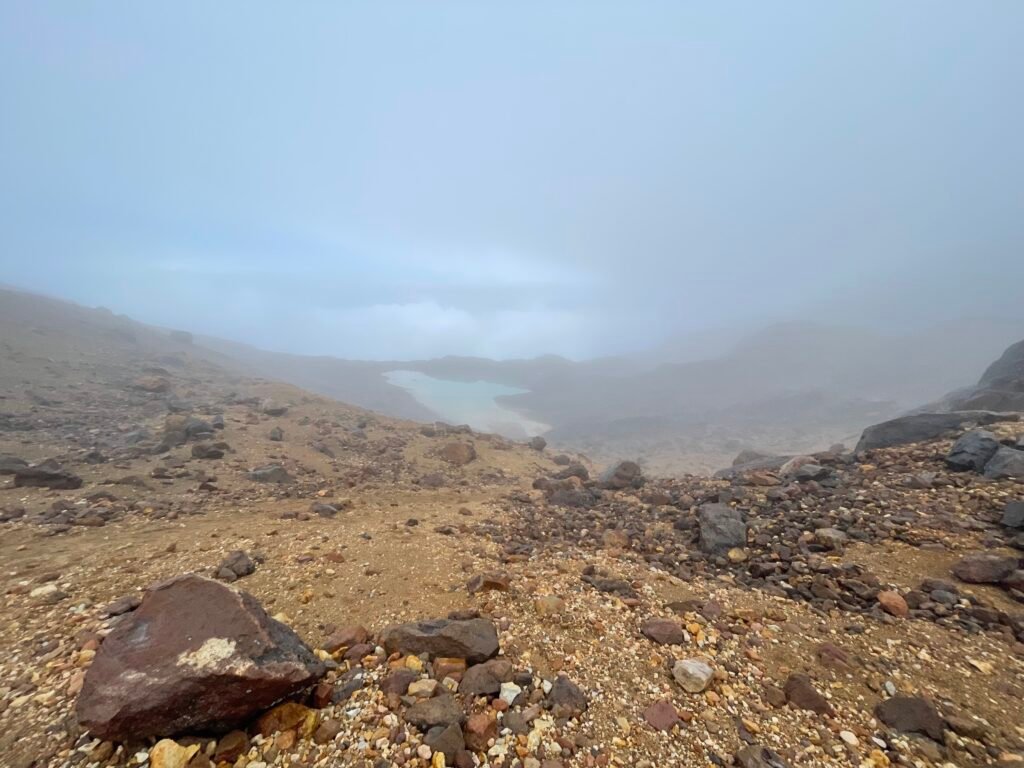
At 11 p.m., the alarm went off and we got out of bed, dressed, and went downstairs to have a snack before going for the summit. Around 12 a.m. of Sunday, we started our hike. The first part was easy to walk; it consisted of a rocky and sandy terrain. Soon, we reached the glacier where we put on our crampons, and roped ourselves. The compacted snow and almost-no wind helped us a lot to walk with no major difficulty other than the altitude itself.
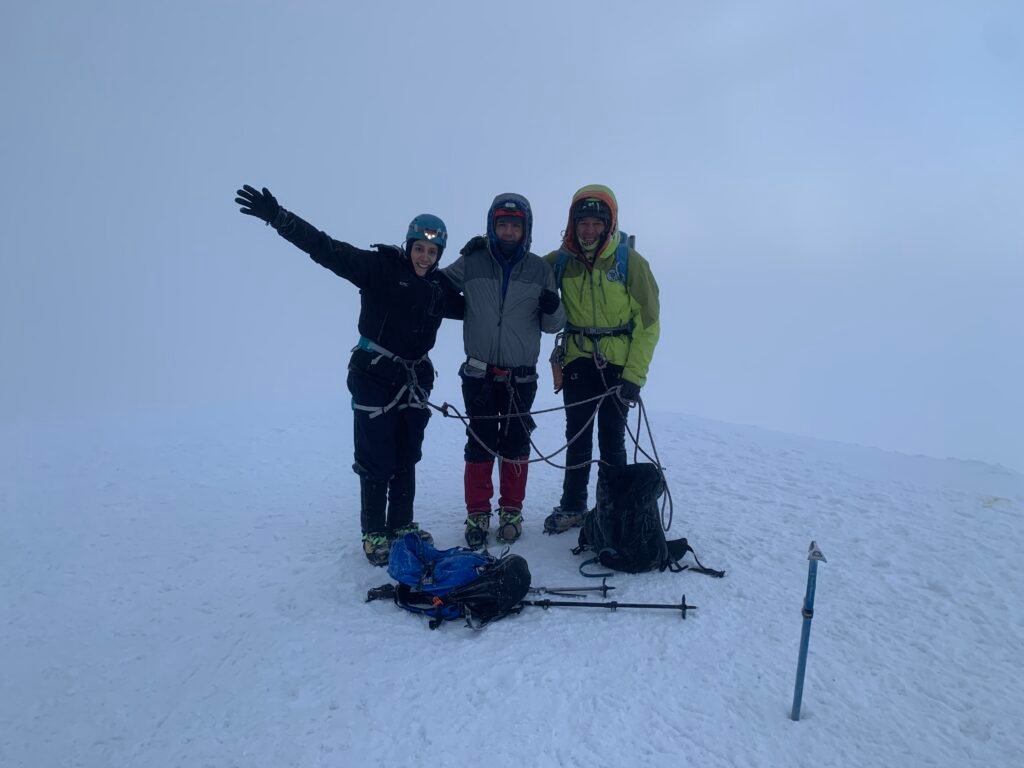
I began to mentally struggle the last 30 minutes before the top; I did not have altitude sickness at all, but a feeling of boredom was emerging and made me knock down myself several times. At this point, the patience of my rope mate, and the motivating lines of my guide played a really important role. Our ascent took 6 hours and 30 minutes. On June 20 of 2022, exactly 8 months after my first attempt, at 06:30, we were able to be, for our first time, in the summit of the third highest mountain of Ecuador, at 5790 m.
The descent took almost 2 hours and 30 minutes. Once back in the hut, we had a big and tasty breakfast served by the always-kind hut staff. Right away, we changed clothing, packed our stuff, and headed back to the Park’s checkpoint, with an unquantifiable feeling of happiness and gratitude.
So, why will Cayambe Volcano remain one of my favorite mountains? It made me understand many important lessons about the mountain, both when I failed and when I succeeded:
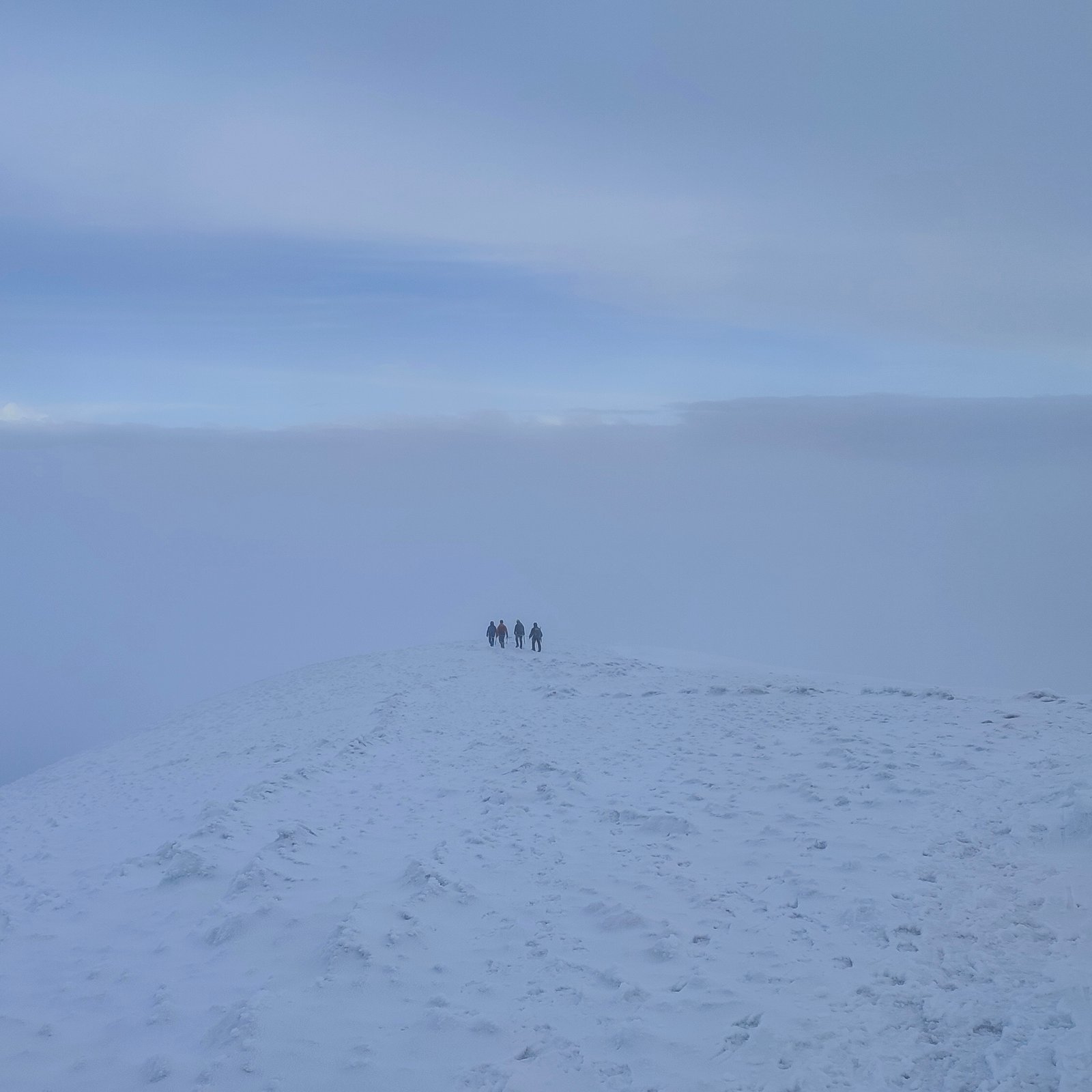
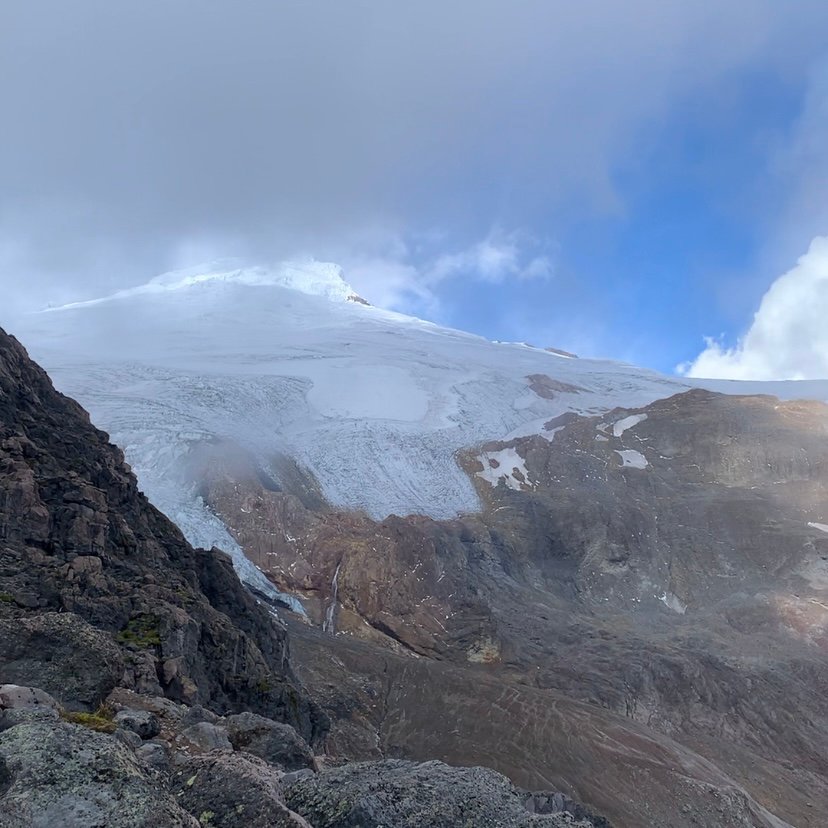
- The mountain and the weather can be pretty volatile. To put it in context, my up-to-now 2 visits to the Cayambe mountain were extremely different. My first time: the snow reached the checkpoint before the hut; I could not see the peak from the hut, it was totally cloudy; the wind was the fiercest I have evert felt, so strong that it felt like a giant was trying to demolish the hut, so obstinate that we delayed our summit attempt; we would bury our legs in the snow while trying to climb; the sky and the snow could be confused as the same. My second attempt: there were barely small traces of snow just when we reached the glacier; the sky was partially clouded, but we could clearly see the summit; the wind decided to rest, and worked from our side; the snow was compact and we could walk straightly; the sky and the snow did not merge and could be distinguished. The second time, I was lucky to see a wonderful palette of black, orange, yellow, and white colors.
- The mountain will always be there. As most of the guides will always say, “the true summit is coming back home alive and healthy”. If the mountain clearly shows that it is imprudent to continue, listen to it, and humbly, go back.
- Things take time. If you are prepared, and the mountain conditions are good, the mountain will be friendly to you. Be patient, be ready, and learn to wait.
- Both physical and mental preparation are extremely important. There might be people not prepared enough that after hours of struggle, and unnecessary risks, reach the summit. But what is the point in this? The mountain should be a place to enjoy, not to suffer. It is Ok to challenge our limits, but do not let our egos underestimate the effort it takes to go to a mountain.
- Some might struggle more with the ascent and others with the descent. Reaching the summit is just one part of the trail; the way back is just as important as the first.
- Trust is key. Trust your preparation, trust your guide, trust your rope mate, trust your logistics support team, trust yourself.
Please feel free to leave a comment or send an email to info@whataboutecuador.com in case you need recommendations or more information for your next visit to the Cayambe Volcano or any other Ecuadorian destination.
Leave a Reply