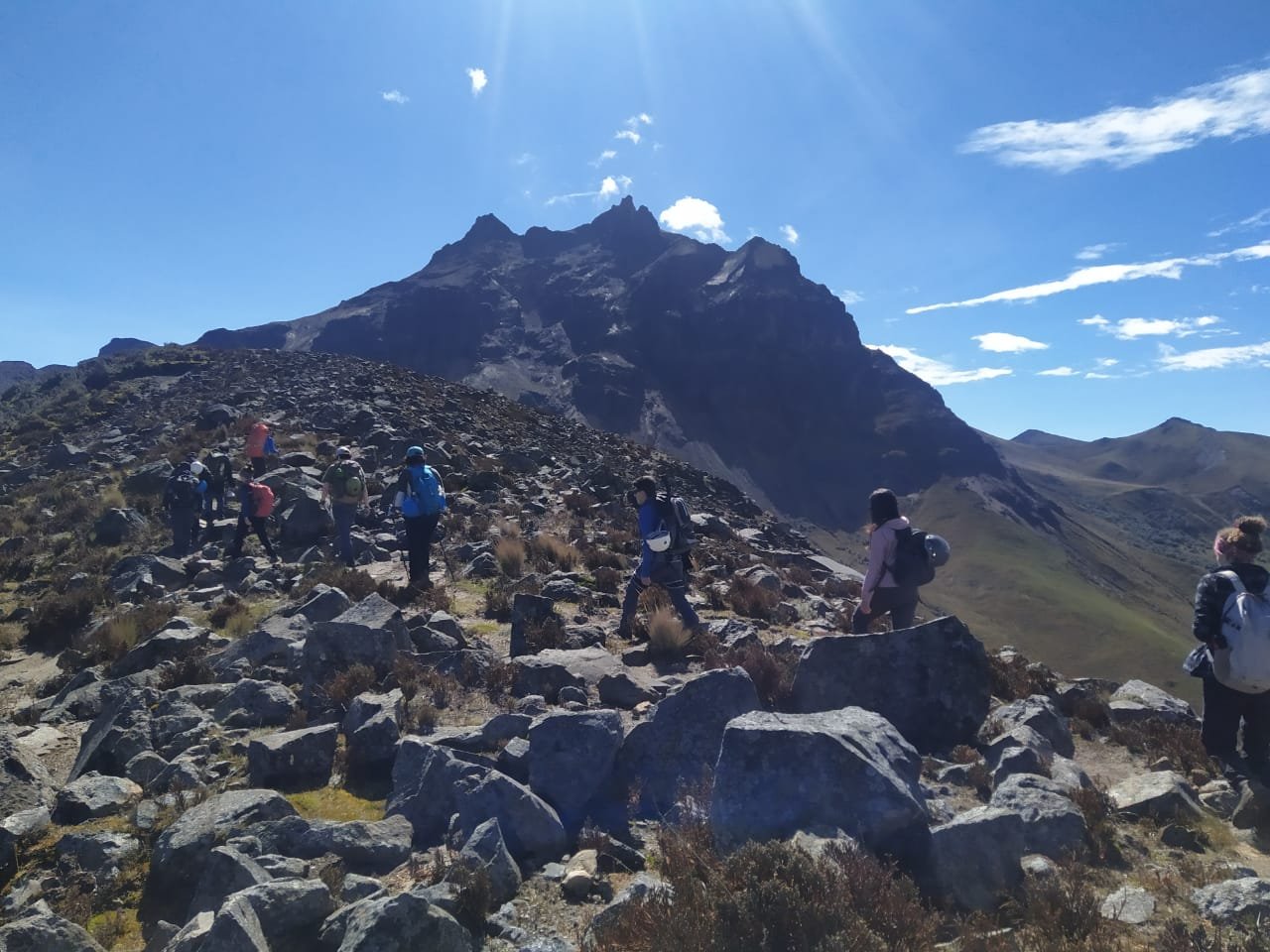
An electric peak
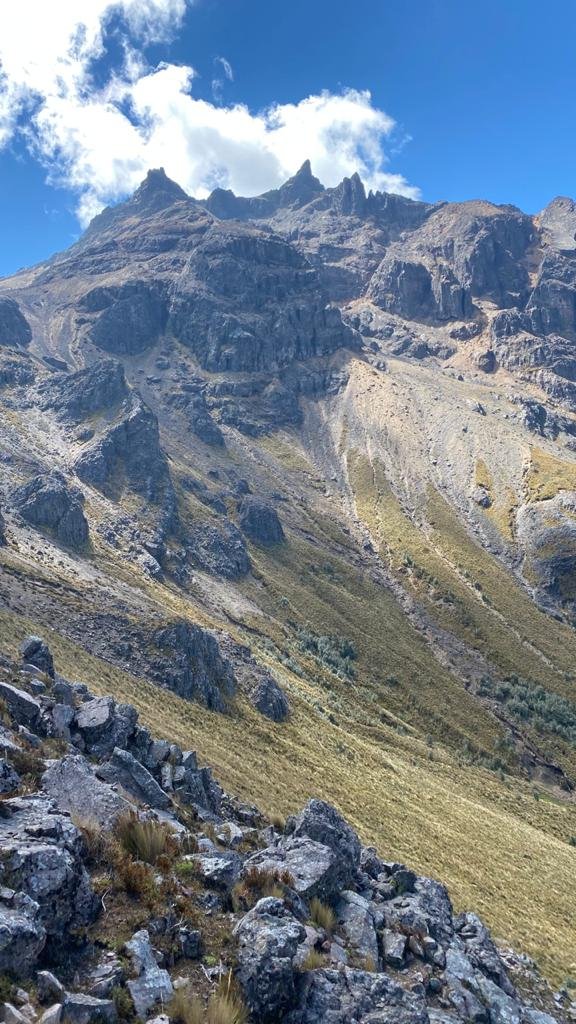
Despite being among the 15 highest mountains of Ecuador, Sincholagua is not frequently visited. One of the reasons is related to its accessibility, since you will necessarily require a 4×4, unless you want to add many extra hours to your hike.
The technical skills required for this mountain could also explain why it is not the common choice for many first-time climbers; even if not at a high altitude, this is a rocky mountain where you will need to climb, to deescalate, and to rappel. In addition, you need to pass through a private access to get to the base of the mountain.
I went to Sincholagua for the first time in 2021, as part of a acclimatization program for my first attempt of the Cayambe summit. Before going, I had a preconceived idea about this mountain; I had heard some comments in the past which made me think that this was an extremely exhausting peak. With these thoughts in my mind, my expectations were to perform just good enough to reach the summit and come back safely.
I hired the services of an agency that was organizing a 1-day team hike. It is also possible to arrange by your own the logistics (transportation, 4×4, guide, the keys for entering the private property that gives you access to Sincholagua, mountain gear, etc.).
Since it was my first time going, I preferred to have someone already experienced in this mountain to organize everything I needed. On a Saturday, we set off from Quito very early in the morning, at 5 a.m. We accessed the mountain through an entrance of the Cotopaxi National Park, near to Machachi (not the common entrance for going to the Cotopaxi Volcano). In El Pedregal village, some minutes after Machachi, we took the 4×4 vehicles, and headed towards the hike starting point, crossing the private property.
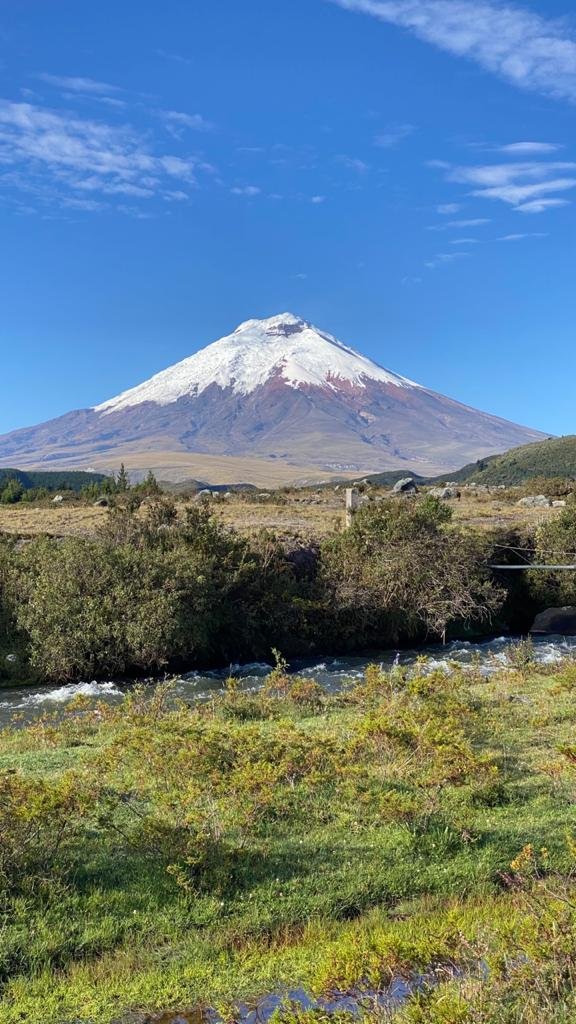
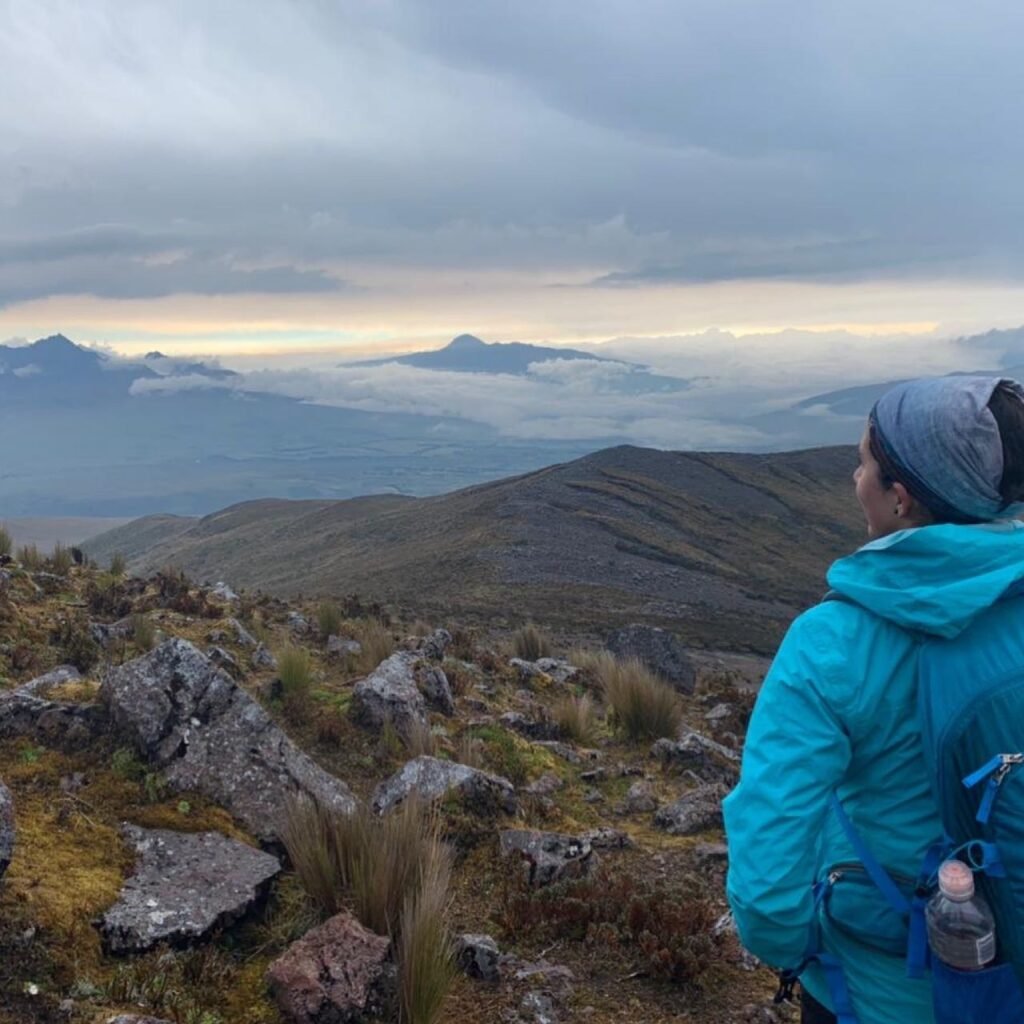
The logistics of the Agency I hired was well arranged, and the estimated schedule was accurate. As we entered the park, a light gelid wind invaded the atmosphere, in a good combination with a clear sky that showed us the bright sun. The cloudless sky allowed us to see the Sincholagua, and other surrounding mountains, such as the Pasochoa, the Rumiñahui, and the emblematic Cotopaxi. Once we reached the hiking starting point, we put on the technical gear (harness, helmet, and a carabiner).
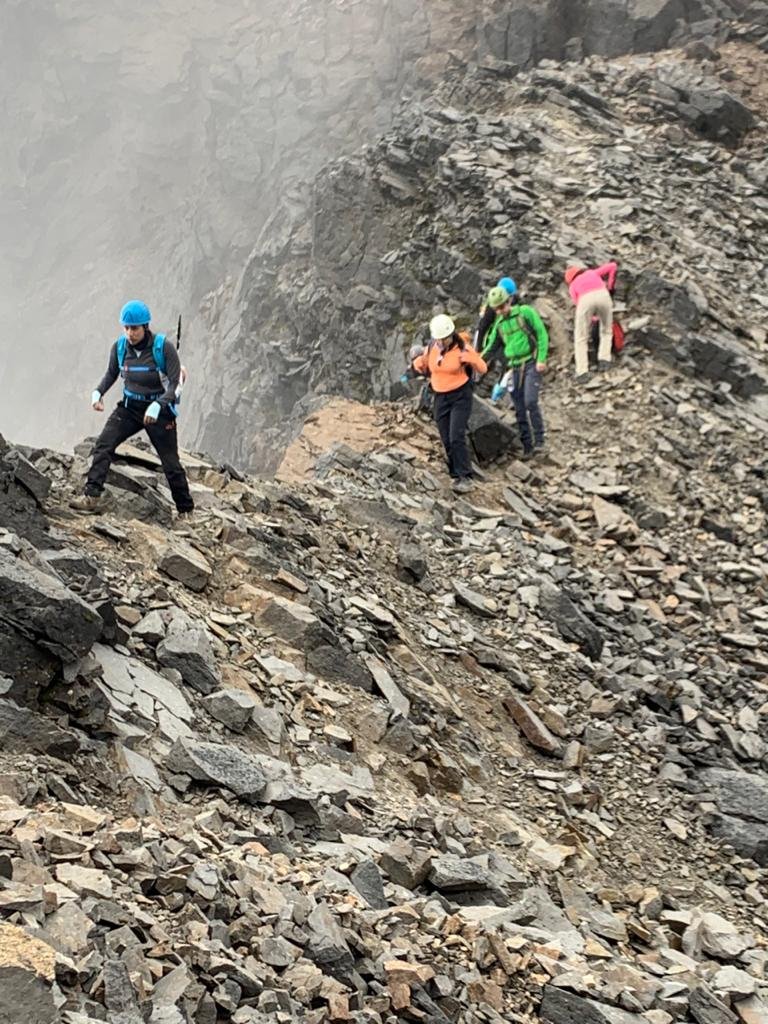
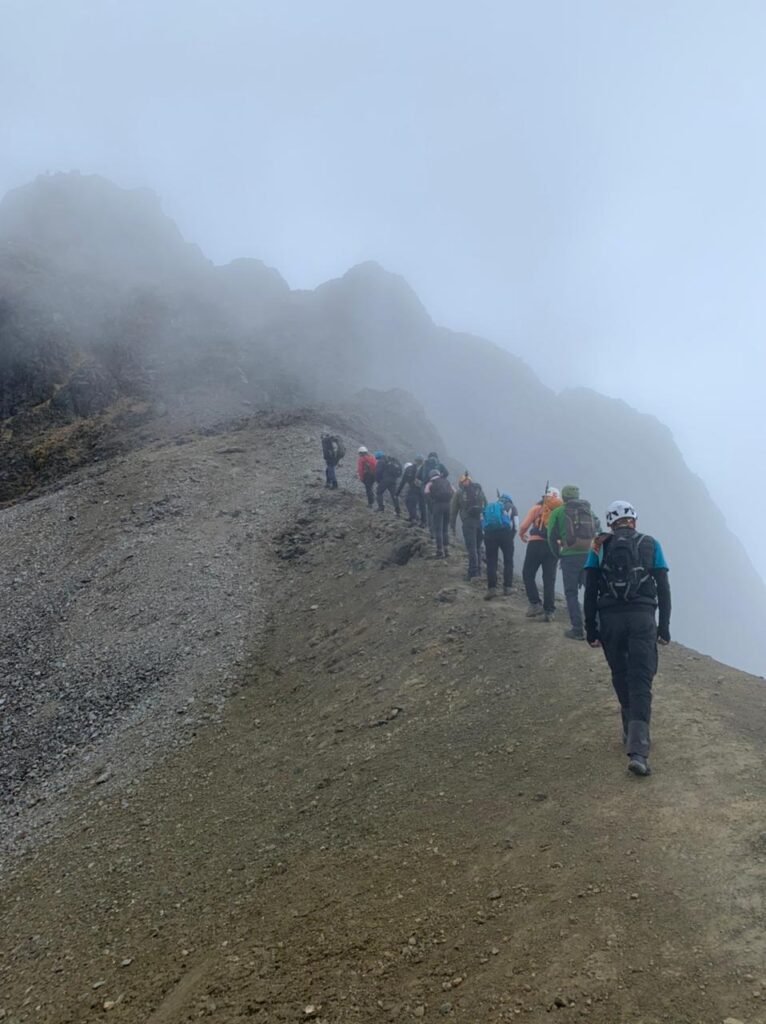
The physical condition of the group was pretty good. We had our first pause after 45 minutes of walking, just before starting the walk in the pajonal stretch. After the pajonal, there was a rocky terrain, where we packed our trekking poles in order to have free hands, available for escalating when necessary.
In general terms, I believe the hike was demanding because of the distance and hours of walking, even if it was not a highly technical mountain. It is important to be really careful when walking, specially in the sandy and rocky terrains, since the rocks are not stable and might fall.
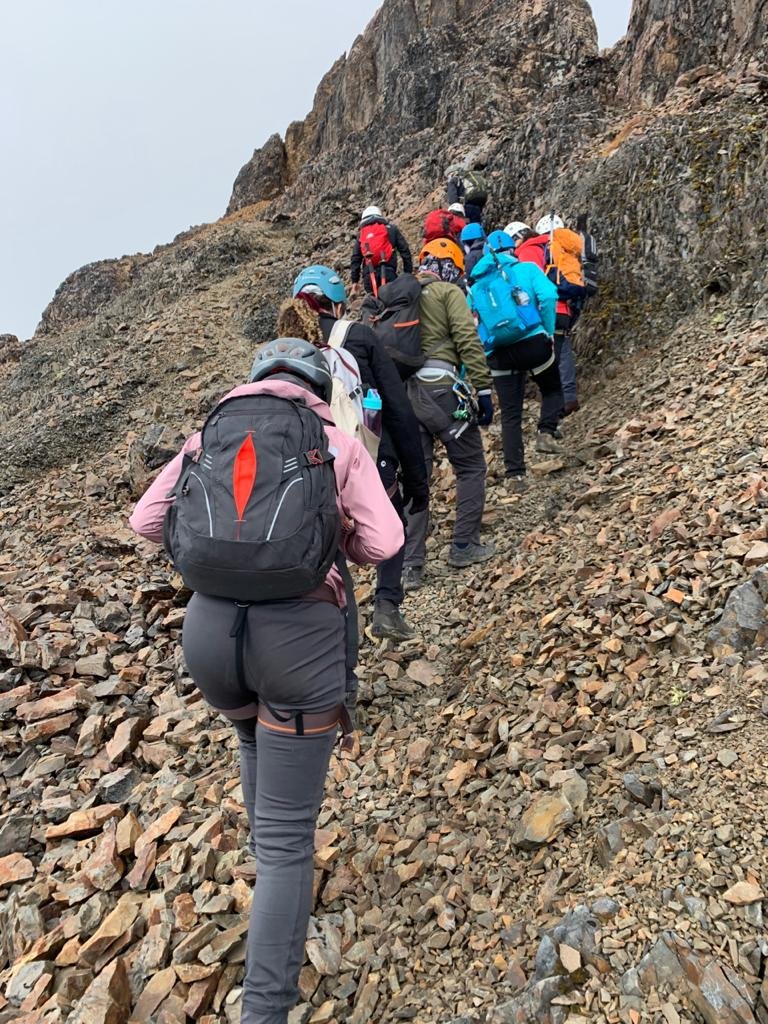
As the hike progressed and we got closer to the summit, the mountain let us see that the environmental conditions would soon change, so we had to accelerate our pace. When we reached the last rocky stretch, where we would have to escalate in order to get to the summit, a subtle drizzle and a hailstorm decided to accompany us.
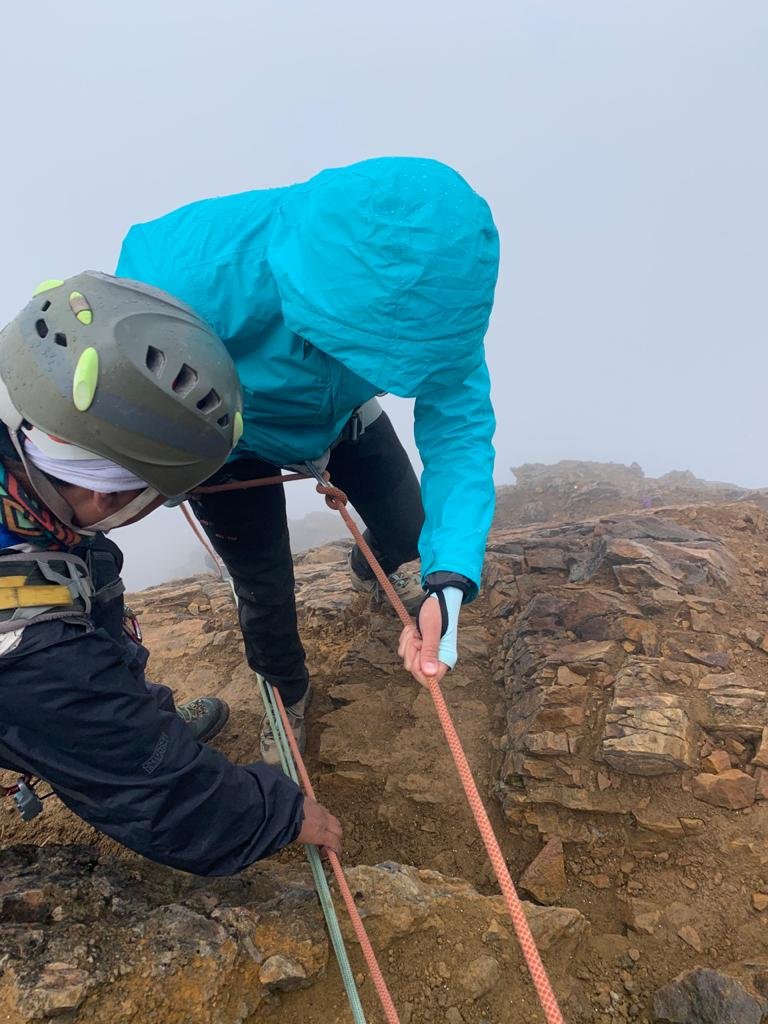
We left our backpacks in the base of the rock and hurried to escalate. Two guides went up first, and the other two stayed down at the base, to support the ascent. One by one, we started escalating the wall, that had around 25 m. in height, and an inclination of a little less than 90º, though it was friendly enough to be easily climbed with a little precaution and technique. Regardless not having used a rope ourselves for this stretch, it is highly recommended to do it. After all, this is a wall exposed to the abyss; a bad step could have turned in a tragedy.
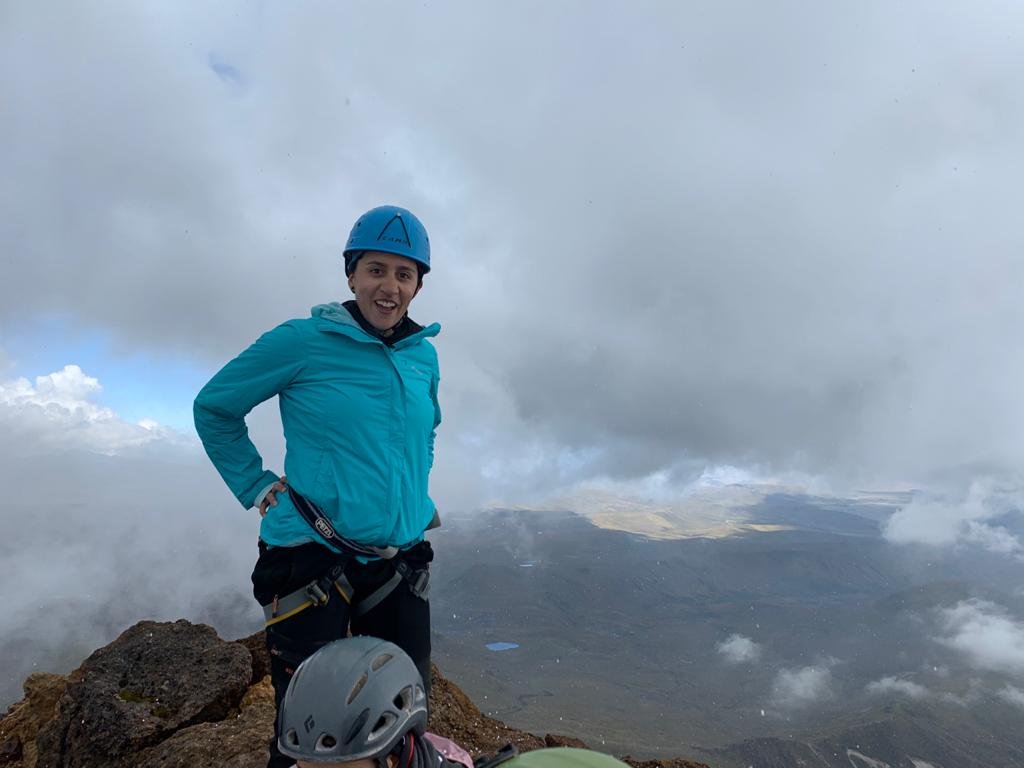
The guides suggested to not see up nor down, since there were small and medium-sized rocks falling, especially when the people up of us took a bad step. After a couple of minutes, most of us had made it to the summit of this beautiful and unfrequently-visited mountain.
We quickly took the photos that would be the evidence of our arrival to the summit. An electric storm and the static-feeling up there hurried us for the descent. We could not touch our teammates without feeling an electric current going through our bodies. Also, the sound of electricity in the air was really audible. Hence, some people of the group, the ones that were last, could not make it to the summit. The ones that made it, descended through rappel, though it is not always mandatory (it will depend on the route taken, and the level of expertise).
Once together in the little base, next to the last wall before the summit, we put our backpacks back again, and started descending. The drizzle and the hailstorm did not got worse, and soon disappeared, as we continued walking. During the descent, the fatigue was more evident, and the group was less compact, compared to the beginning. Around 5 in the afternoon, we were already in the pick-up point, were the cars were waiting for us. We stopped in a private little hut, where we were able to go to the restroom, take some hot beverages, and get in the bus that would take us back to Quito.
Leave a Reply