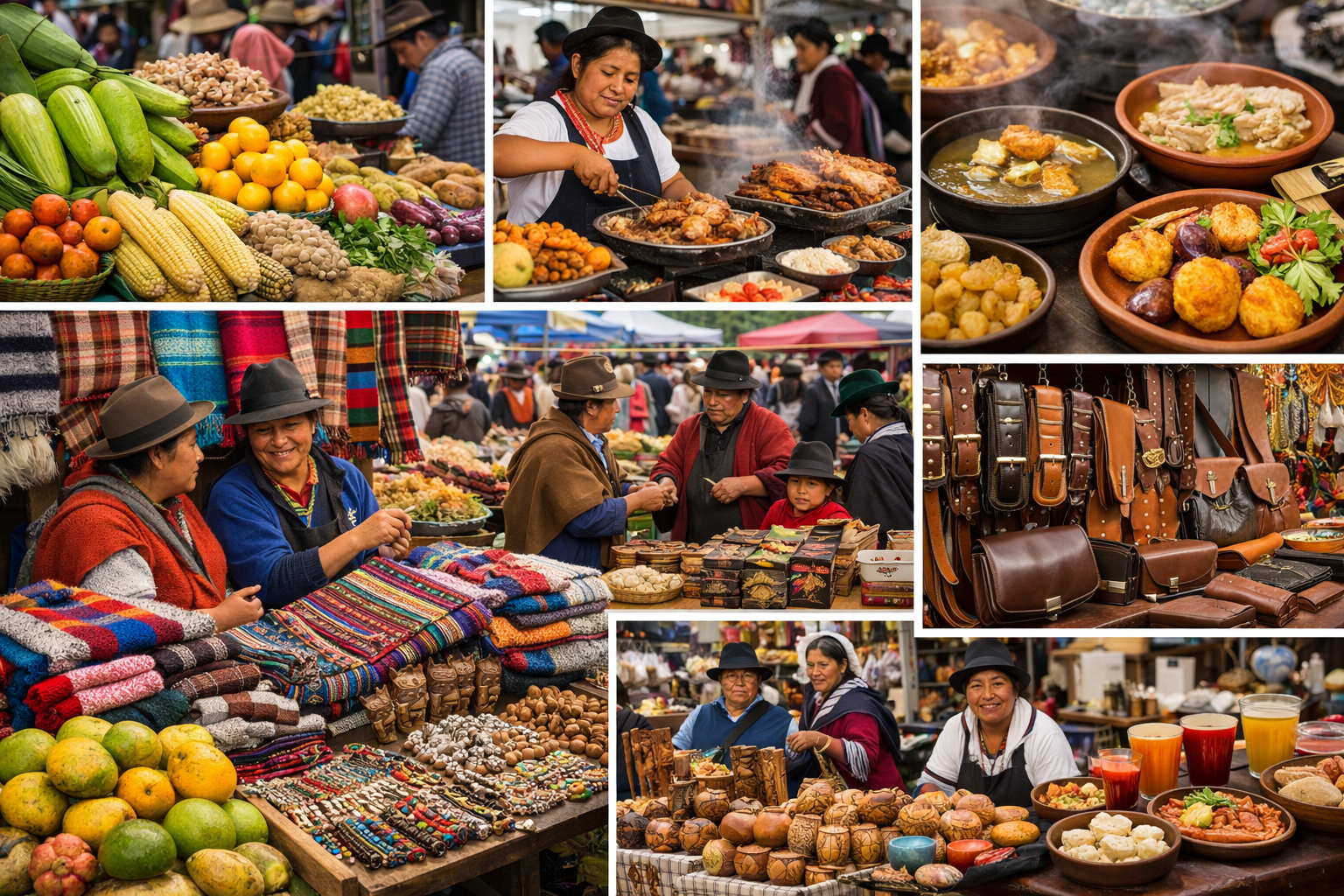
One of the first pieces of advice I would give you when visiting Ecuador is surprisingly simple:
Don’t just visit the landmarks you’ve heard about in the news—visit the markets.
Yes, you’ll find all sorts of articles, including fresh fruit, handmade crafts, and delicious street food. But you’ll also immerse yourself in the everyday rhythm of Ecuadorian life.
For many Ecuadorians, markets aren’t tourist attractions. They’re must-go places where families do the grocery shopping, people have lunch, artisans sell generations of craftsmanship, farmers display their products, and neighbors stop to chat before heading home.
If you want to add a cultural touch to your next adventure in Ecuador, spend some time in one of its markets.
You won’t just leave with souvenirs.
You’ll leave with stories.
Why Ecuador’s Markets Are Worth Visiting
Every region of Ecuador has is a living proof of its diversity, and nowhere is that more evident than in its markets.
Depending on where you go, you might find:
- Handwoven textiles made using centuries-old techniques
- Exotic fruits you’ve probably never tasted before
- Traditional dishes prepared just as they’ve been for generations
- Artisans eager to explain the meaning behind their work
- A glimpse into everyday Ecuadorian life that no museum can replicate
To make the most of your visit, I encourage you to arrive early.
That’s when the markets are at their liveliest, filled with colors, aromas, and conversations that make you feel like you’ve stepped into the heart of the community.
Otavalo: A Celebration of Indigenous Culture
If there’s one market that has earned international recognition, it’s Otavalo—and for good reason.
Located in Ecuador’s northern Andes, in the Imbabura province, this market is one of South America’s most famous places to discover Indigenous craftsmanship.
As you stroll through its colorful stalls, you’ll find:
- Handwoven blankets
- Alpaca sweaters and scarves
- Leather goods
- Jewelry
- Paintings and wood carvings
But don’t rush from stand to stand.
Take time to chat with the artisans.
Many are selling pieces their families have been creating for generations, and hearing the stories behind their work often becomes just as memorable as the items themselves.
My advice? Buy something you’ll actually use back home. Every time you see it, you’ll remember the person who made it.
Saquisili: Where Locals Still Outnumber Tourists
If you’re looking for a more authentic market experience, Saquisili is one of the Ecuadorian most authentic markets.
Unlike markets that have become well known internationally, this one still feels deeply connected to everyday life.
On market days, farmers from surrounding communities arrive before sunrise, bringing everything from fresh vegetables to livestock.
You’ll see:
- Families negotiating prices.
- Farmers wearing traditional Andean clothing.
- Stalls overflowing with local produce.
- Home-cooked meals served to workers starting their day.
There’s no performance for visitors.
And that’s exactly what makes it so fascinating.
Guamote: A Window Into Rural Ecuador
Visiting Guamote Market feels less like sightseeing and more like stepping into another rhythm of life.
Set high in the Andes, it’s one of the country’s most traditional Indigenous markets.
Here, you won’t find polished souvenir shops or carefully designed displays.
The market is lively, colorful, and wonderfully unpredictable.
You’ll hear Kichwa (one of Ecuadorian official cultural languages) spoken alongside Spanish, watch farmers gather after long journeys through the mountains, and see products that rarely appear in supermarkets.
For photographers and culturally curious travelers, it’s an unforgettable experience—but remember you’re visiting a working market, not an open-air museum.
Always ask permission before photographing people, and take time to interact respectfully.
Cuenca’s Mercado 10 de Agosto: The Best Place to Taste Ecuador
One place to discover Ecuadorian flavors is a traditional food market.
Mercado 10 de Agosto in Cuenca is an excellent place to start.
Forget international restaurant chains for a moment.
Here you can enjoy dishes prepared by people who’ve often been cooking them for decades.
Some local favorites include:
- Fresh fruit juices
- Hornado
- Llapingachos
- Mote dishes
- Seasonal soups
One of the most enjoyable parts of visiting is simply walking through the fruit section.
You may discover babaco, taxo, naranjilla, or tree tomatoes—fruits many visitors have never even heard of.
Don’t hesitate to ask vendors how locals eat them. Most will be happy to explain.
Guayaquil’s Caraguay Market: A Feast for the Senses
Markets don’t always mean handicrafts.
Some offer an entirely different kind of experience.
Caraguay Market, in Guayaquil, is one of Ecuador’s busiest seafood markets, where the day’s catch arrives fresh from the Pacific.
The atmosphere is energetic from the early hours.
You’ll watch fishermen unloading their boats, vendors preparing seafood for restaurants and families, and buyers carefully selecting everything from shrimp to fish and shellfish.
Even if you don’t plan to cook, visiting offers a fascinating glimpse into Ecuador’s coastal culture.
If seafood is at the heart of the Ecuadorian coast, this is one of the places where that story begins.
The Best Souvenir Might Not Be What You Buy
One of the aspects that markets remind us about is that travel isn’t only about seeing beautiful places.
It’s about meeting people.
The woman patiently weaving a scarf.
The fruit vendor who insists you try something you’ve never tasted.
The cook who proudly serves the same recipe her grandmother taught her.
These moments can’t be packed into a suitcase.
Yet they’re often what travelers remember long after the trip is over.
Markets are where Ecuador’s traditions continue to live—not behind glass, but in everyday life.
Some additional tips
- Arrive early.
- Walk slowly.
- Bring cash.
- Remember to mention allergies before selecting a dish.
- It’s ok to bargain, most of locals usually do it.
Leave a Reply